
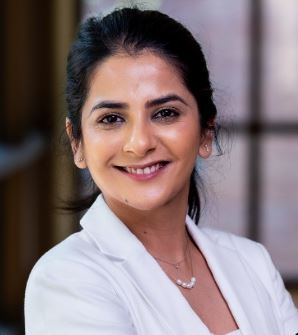
For most of her life, Amrrita Chopraa had no words to explain the challenges she faced. Within the cultural context of India, where she was raised, autism and ADHD were rarely spoken about and awareness was limited. It wasn’t until April 2023 that she finally received a formal diagnosis confirming what she had long suspected, she had been living with both conditions all along.
The diagnosis brought clarity but also highlighted cultural stigma. Many people around her still believed that acknowledging neurodivergence was “labeling” oneself in a negative way.
“People feel that labeling myself might harm my mental status,” Amrrita said. “But I am okay. I’m all good. That’s just how they still think, even people my age.”
Early Work Experiences and Subtle Clues
Before her diagnosis, Amrrita had already built a career in software and technology. She didn’t see herself as autistic or ADHD because she hadn’t known much about either.
“When I used to hear ‘autism,’ I thought it was something really big, like cancer or something like that. I never explored it because I thought, ‘I don’t have anything like that.’”
Looking back, however, the signs were there. She often switched topics quickly in conversations, leaving others confused. She found small talk exhausting, struggled to read in noisy spaces, and doubted herself when her husband could finish books quickly while her own mind raced with distractions. Sensory challenges like needing sunlight, discomfort with cold office environments, and difficulty with eye contact also played a role in her daily life.
Cultural differences further shaped how she made sense of these experiences. Growing up in India, she often explained her struggles as cultural rather than neurological.
“I used to give myself explanations,” she reflected. “Maybe I can’t make eye contact because in India people think of it differently. Or maybe I don’t like small talk because I’m just more direct.”
Navigating the Workplace
At work, challenges sometimes turned into toxic experiences. Amrrita described having managers who micromanaged her to the point of making her feel unsafe. One supervisor monitored her online status even after leaving the office himself, sending warning messages if she logged off early. Another frequently hovered over her desk, scrutinizing her screen and questioning her progress. The constant surveillance created an environment she recalls as deeply toxic.
When the situation escalated with inappropriate language, she found the courage to file an HR report thanks to a supportive colleague.
“I had no guts at that point to say, ‘Stop that, this is not nice,’” she admitted. “But then another colleague of mine gave me strength and I ended up creating an HR report.”
Although the process was lengthy and stressful, it helped her see the importance of advocating for herself, even in environments that were not always fair or safe.
Finding Support and Community
Despite difficult experiences, Amrrita also found strength in supportive networks. At one workplace, she joined a voluntary ADHD support group that met weekly.
“It was a psychologically safe meeting. Anyone could join. There were no obligations to join, no questions asked if you couldn’t. We shared our challenges and sympathized with each other. It was something very validating and supportive.”
Those conversations eventually encouraged her to seek her own diagnosis and connect with others locally who guided her through the process.
Therapies, self-help books, and peer support became more central to her coping strategies than medication, which she chose not to pursue. When stress builds, she turns to physical activity, music, and small routines like grocery shopping or doing laundry to reset her focus.
Education and Accommodations
Now back in school for an MBA, Amrrita has begun accessing formal accommodations for the first time in her life, something she hadn’t even realized was available. Extra time on exams and the ability to record lectures have made a dramatic difference.
“Now I feel the game is fair. I have enough time to think when I’m writing exams.”
Group assignments remain a challenge, particularly around rejection and inconsistent commitment from peers, but she hopes future accommodations can support more independent project work.
Hopes for the Future
When asked what she wished leaders and colleagues understood about people who are neurodivergent, Amrrita didn’t hesitate.
“It’s still a big taboo. People think about neurodivergence in a negative way, they think we only have challenges. They don’t see our talent that is different from others. That is why I always feel, is it safe to share? Will I be judged?”
For her, the future of inclusive workplaces lies in small but meaningful changes: offering remote work options to reduce distractions, fostering team-building through activities that help people connect on a more personal level while also understanding each other’s working styles.
Despite the struggles, Amrrita holds onto optimism.
“I’m thinking that we are special in the best possible way,” she said with a smile.