
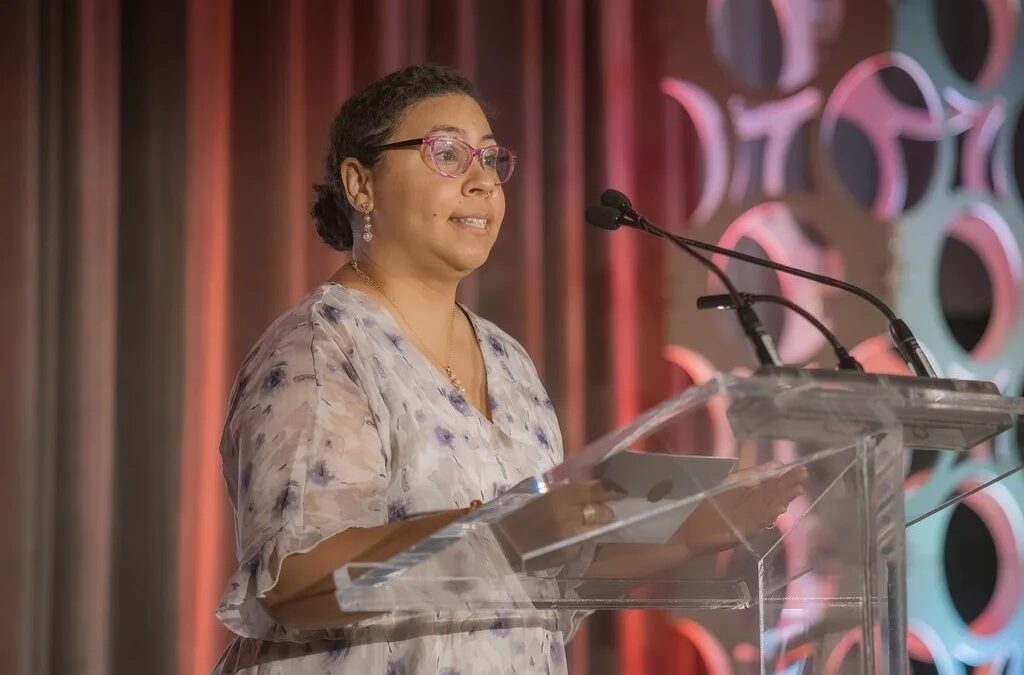
When Sydney Elaine Butler was six years old, they were diagnosed with autism. At the time, they did not understand what that meant, only that certain things in life felt harder for them than for others. Years later, at 21, they also received a diagnosis of complex post-traumatic stress disorder (CPTSD).
Growing up, Sydney gravitated toward the creative arts. Before social media made photography popular, they spent their teenage years behind a digital camera, capturing photos for restaurant menus and crafting freelance projects without knowing there was even a word for it yet.
“I remember being so excited to take my camera everywhere,” they said.
Photography gave them an outlet for self-expression and authenticity, something that would later shape how they approached their work and identity.
Discovering Inclusion in the Workplace
At 18, Sydney began working for the local recreation center, specifically in the inclusion department, where they supported children, teens, and adults with disabilities. It was their first real encounter with inclusion as both a professional responsibility and a personal mirror.
“I was masking,” they reflected. “I didn’t know how much it was impacting me because I was so used to masking my traits. And then when I was working with these individuals, everything was making more sense.”
Working with participants helped Sydney recognize parts of themselves they had long hidden. They connected deeply with the individuals they supported, ensuring everyone’s needs were met and that each person felt valued.
“I was helping them feel included in different ways and how they needed to show up that day.”
But despite their empathy and dedication, Sydney noticed a disconnect between how their coworkers treated them and how they treated participants.
“I was so passionate about working with the participants,” they said. “But my coworkers didn’t see the benefit of actually meeting the participants where they are and personalizing things for them. They just wanted to run the program as is.”
This gap between compassion and procedure became increasingly clear and painful when Sydney began advocating for more adaptive approaches, accessibility in programming, and safer practices for staff and participants.
Living with fibromyalgia, a chronic condition that heightens pain sensitivity, made Sydney more aware of how physical tasks could affect workers’ health. When they spoke up about unsafe lifting procedures and pushed for change, their concerns were dismissed.
“When I disclosed my diagnosis, it backfired on me,” they shared. “Rumors were spread about me that I was lazy, that I didn’t want to do my job anymore, that I was about to leave, or that I thought I was better than the place.”
What began as a job grounded in care became an early lesson in how misunderstanding and stigma can isolate neurodivergent employees, even in spaces that claim to be inclusive.
From Burnout to Breakthrough
After six years in that environment, Sydney felt torn between loyalty to their participants and the growing toxicity among staff. When the pandemic hit in 2020, it became a turning point. Upon completing their degree in human resources, they decided not to return to the center and instead briefly worked at a non-profit, where they realized they wanted to channel their passion into creating meaningful change within the communities they identify with.
“I’m so passionate about really coming to terms with my identities,” they added.
The negative effects of masking, over-performing, and constantly advocating for themselves left Sydney craving authenticity. It also gave rise to something new: the idea that inclusion could be more than a policy, it could be personal.
Building Accessible Creates
In 2021, Sydney founded Accessible Creates, an HR and Diversity, Equity, Inclusion, and Accessibility (DEIA) consultancy focused on neurodiversity and disability inclusion. Drawing on both their education and lived experience, Sydney began working with organizations to bridge the gap between policy and practice.
When they first got started, they noticed that most conversations in the field focused on digital accessibility, which was important but incomplete. Many organizations overlooked the human element, what it truly means to accommodate someone or to self-advocate.
“I realized that a lot of businesses don’t understand,” they explained. “There seems to be that disconnect between lived experience, policies, procedures and the systems in the organizations.”
Sydney now collaborates with companies to review policies, improve inclusion practices, and coach neurodivergent and disabled job seekers on self-advocacy. They wanted to bring these perspectives together to make a real difference, encouraging HR professionals to adopt a more open-minded approach to accommodation and to rethink what meaningful support looks like for employees with disabilities and neurodivergent identities.
Redefining Work and Rest
Running a business as a neurodivergent person requires constant recalibration. Sydney relies on to-do lists and self-care checklists, small, practical tools that keep them grounded.
“People think that because I’m a founder, I must have so much energy and be super organized,” they admitted. “But I struggle to brush my teeth in the morning if I don’t have stickers to remind me.”
After recently experiencing burnout tied to personal loss and overwork, Sydney began taking monthly mental health days to rest intentionally. How Sydney handles these periods depends on their energy levels. When they’re feeling more active, they’ll do activities like journaling, yoga, going for walks with their dog, and painting. However, if they feel more drained, they will lie in bed with their dog, order food and watch Netflix.
When discussing burnout, Sydney pointed out how often neurodivergent people misinterpret exhaustion as something else.
“I feel like it’s so easy for us [neurodivergent folks] to go into burnout, but not even realize that we’re in burnout,” they reflected. “A lot of times we just equate it with being lazy, but it’s not laziness. It’s us being tired from all the things we go through and are at our wit’s end.”
A Vision for True Inclusion
Through Accessible Creates, Sydney has turned their challenges into advocacy, offering organizations the chance to learn from lived experience rather than abstract ideals. They also see the value of collaboration, especially with other neurodivergent consultants who share their openness and honesty.
“It’s more organic,” they said of working with neurodivergent peers. “I worked with a consultant who had ADHD. We really fell into a rhythm of understanding how we would work best together. That mutual respect for each other and understanding how our brains work differently helped us to create the best service for our clients.”
When asked what they wish more leaders and coworkers understood, Sydney’s answer was simple:
“I wish they took the time to get to know us as individuals. We have such complex stories, and you don’t know everything somebody’s dealing with.”
Sydney’s story is one of resilience, reflection, and redefining what success looks like, not through perfection or productivity, but through authenticity, care, and passion. In finding balance between their work and well-being, they have built a vision of inclusion that starts with understanding and grows through empathy.