
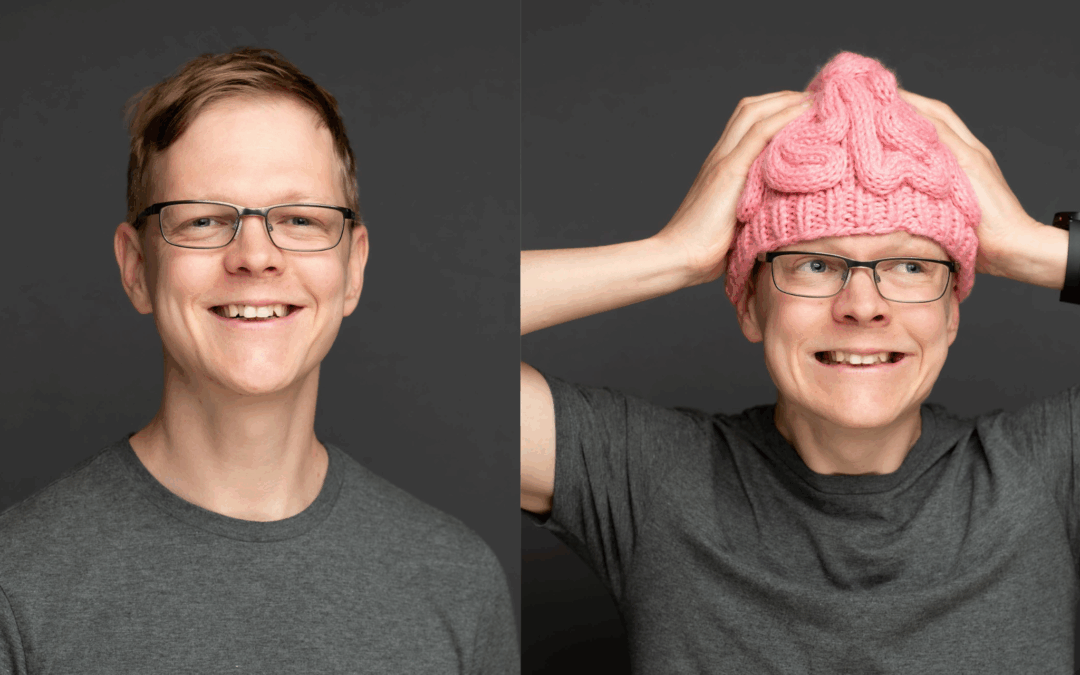
Nat Hawley’s story begins long before he had the language to describe neurodiversity or inclusion. Diagnosed with autism and dyspraxia around the age of three or four, and later with dyslexia at sixteen, he grew up in a world that often misunderstood how he learned and communicated.
As a child, he went through long periods where he barely spoke, especially under stress. He also experienced challenges with movement and coordination. At times, during periods of severe overwhelm or shutdown, he used a wheelchair to conserve energy and stay safe. Everyday tasks that many children learned easily, such as tying shoelaces or doing buttons, took much longer for him to master.
Looking back, Nat remembers often feeling “about two years behind” his peers. At the same time, he was deeply curious and motivated to explore the world. In the early 1990s, however, institutions rarely framed difference as neutral or valuable. Instead, systems emphasized benchmarks and standards. Because Nat did not fit those benchmarks, those systems treated his differences as deficits rather than variations.
Early Work and the Weight of Invisibility
Nat grew up in a single parent household with limited resources. This reality pushed him into entrepreneurship long before he had a word for it. He cut grass, worked at flea markets, and took any small job that allowed him to support his mum and himself. His first official job was at IKEA. It stood out not because it was a perfect fit, but because of the difficulties he encountered while working there.
He struggled with product names, which felt ironic given that people often link IKEA’s naming system to founder Ingvar Kamprad’s dyslexia, as names can be easier to recall than product numbers. Nat noticed the irony, but the job still did not last long.
“I got fired from that job because I ate too many meatballs,” he said with humor. “I got ill too much, so I lost that job.”
Other attempts followed, including roles in retail and fast food. In many cases, recruitment systems filtered him out through psychometric tests designed to identify an “ideal” worker profile. At the time, Nat lacked the language to challenge these systems. He knew he was capable and creative, yet hiring processes repeatedly screened him out while rewarding conformity over potential.
The Reality of Psychometric and AI Screening
As Nat later learned more about hiring practices, he grew increasingly concerned about how psychometric testing shapes access to work.
“There’s a right or wrong answer to having a personality,” he explained. “And if your personality doesn’t line up with what they think is good, then you fail.”
Organizations often build these tools around neurotypical norms. While they help manage large applicant pools, they also filter out people who think or communicate differently. Over time, this practice narrows diversity and limits innovation.
Today, similar issues appear in newer technologies. Some AI-based hiring tools claim to assess traits like engagement, confidence, or communication style by analyzing eye contact, tone, or speech patterns. Nat points out that these approaches can disadvantage neurodivergent people. For example, recruiters may misread avoiding eye contact or speaking quickly as disengagement, even when it is not. When developers train systems primarily on neurotypical data, those systems risk reproducing the same exclusions in new ways.
Navigating Unspoken Rules and Rigid Structures
Beyond formal assessments, Nat encountered many unspoken workplace rules. Job descriptions left little room for learning or growth. Employers expected candidates to claim confidence in every requirement, even when people could learn those skills on the job.
“There’s a lot of unspoken rules and norms which aren’t clarified,” he explained. “I don’t think recruiters actually say what they want. I think there’s this kind of dance that you have to do. So, when it says essential skills, are they actually essential skills? Can some of them be learned? Are some of them mandatory?”
Many neurodivergent people take job criteria literally. If they cannot meet every requirement, they may decide not to apply at all. As a result, recruitment processes filter them out before they ever have a chance to demonstrate their strengths.
When Nat did secure roles, his experience often depended on whether managers offered flexibility. Too often, rigid performance metrics determined who stayed and who did not. Burnout, illness, and redundancy followed. On paper, these systems looked efficient, but in practice, they consistently disadvantaged people whose strengths fell outside narrow definitions of productivity.
Many organizations aim to treat everyone the same, believing this approach ensures fairness. In reality, equal treatment does not always lead to equal outcomes, especially when people have different needs, strengths, and working styles.
“They try to make things easier for them, and also maybe fairer for everyone, but by making things fairer for everyone, it’s not really the true definition of equality, because they’re not making adjustments for each person.”
Moments of Support and What Inclusive Leadership Looks Like
Despite these barriers, Nat encountered individual managers who made a difference. Not companies, but people. These leaders recognized his creativity, his initiative, and the unique value he brought to their teams. They understood that quality mattered more than quantity.
One manager once told him, “You would be very, very difficult to replace,” not because he was perfect, but because that manager chose to see the distinctive value in each person. That message stood in sharp contrast to what another manager told him, “You’re not special, everyone is replaceable.”
The difference between those two messages shaped Nat’s understanding of leadership. In his view, inclusion is not about accommodating someone out of obligation. It is about recognizing their contributions and inherent value.
A good leader, he believes, thinks independently about what “good work” actually looks like.
“If you follow the status quo, and you’re just looking at a checklist of what ‘good’ looks like, neurodivergent people often fall short,” he said. “But if you actually look at the quality of the work, rather than the quantity, things change.”
Building Divergent Thinking
These experiences ultimately led Nat to create his own organization.
Nat Hawley, MSc (Applied Neuroscience), is the founder of Divergent Thinking, an independent neurodiversity consultancy that supports organizations with training, strategy, and culture change.
His work is led and delivered by facilitators with lived experience and focuses on practical, sustainable change rather than awareness alone. He has delivered over 350 sessions across sectors. In his TEDx St Albans talk, he explores neurodiversity and the myth of “normal.” After working with Divergent Thinking, clients typically walk away with clearer adjustment pathways, more confident managers, and practical changes teams can implement immediately.
Through Divergent Thinking, Nat helps organizations move beyond compliance and toward genuine inclusion. His work challenges deficit-based narratives and reframes neurodiversity as a source of insight, creativity, and innovation.
Rather than positioning neurodivergent people as problems to solve, his approach invites organizations to examine their systems. When workplaces fail to make space for difference, they miss out on talent and ideas.
Working in Alignment with His Brain
Being neurodivergent continues to shape how Nat works day to day. As his own boss, he structures his schedule around his natural energy patterns and often works later in the day when his focus is strongest. He prioritizes tasks that play to his strengths and collaborates with others or delegates when needed.
This flexibility allows him to manage a high-responsibility role without the level of stress he experienced in traditional workplaces. By working with his brain rather than against it, he has made his work more sustainable.
Authenticity, Disclosure, and Client Relationships
Nat describes authenticity as central to how he works with clients and collaborators. Rather than masking, he brings honesty and vulnerability into his interactions, which often helps build trust. While this approach may not suit everyone, it tends to attract collaborators who resonate with his way of working.
Although he is open about being neurodivergent, Nat does not encourage disclosure as a universal solution. Bias and misinformation remain common, and disclosure can carry real risks. For him, openness has become a professional strength, but he emphasizes that deciding whether to disclose should always remain an individual choice.
Burnout, Boundaries, and Performance Perception
Nat also reflects on periods of burnout, particularly when organizations positioned him as a symbolic “success story” for neurodiversity. Being treated as a representative rather than as a person became exhausting and gradually eroded his sense of self.
“It’s kind of devalued me. It made me feel that I had to be the voice for every single person who was neurodivergent. And I guess I lost my own sense of identity.”
He also experienced extremes in how people perceived his performance, receiving excessive praise at times and harsh criticism at others. Over time, he learned to protect himself by setting clearer boundaries, using assistive tools, and scheduling intentionally, including building buffers between meetings. These strategies help preserve his energy and support sustainable work.
Rethinking Neurodiversity, Inclusion, and Workplaces
For Nat, neurodiversity is not about deficits or diagnoses. It is about recognizing that every brain brings value. While diagnoses can offer useful insight, they often focus too heavily on struggle and should not determine a person’s worth or access to support.
He advocates for workplaces that move beyond equality toward equity, where organizations build adjustments into systems rather than granting them reluctantly. In truly neuro-affirming environments, flexibility operates as a standard way of working, and support exists without stigma. When individuals succeed, organizations benefit as well.
“There’s never going to be a perfect workplace, but people have to be willing to be continuously adapting, tweaking and making changes,” he emphasized. “They need to understand why they’re making the changes. They’re not doing it just because I’m complaining and I’m being difficult, you’re doing it because you benefit. When I succeed, you succeed, and when you succeed, I succeed.”
To learn more about Nat and his work, readers can visit www.divergentthinking.uk.