
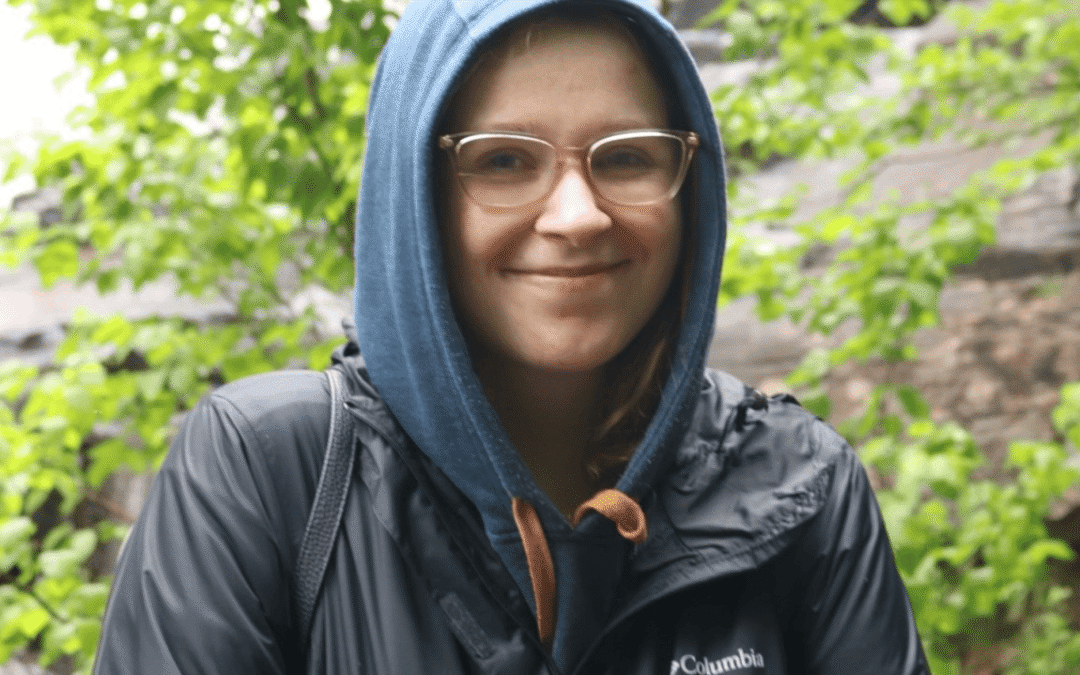
Meet Marisa McClure, a Case Worker at Big Brothers Big Sisters of West Island. Diagnosed with ADHD in 2016 and later with dyspraxia and dyscalculia in 2021, Marisa’s neurodivergence shapes how she navigates the world, bringing bursts of creativity, hyperfocus, and resilience, but also moments of frustration and misunderstanding.
“Dyscalculia is kind of like dyslexia but with numbers,” she explained. “I can’t do math in my head or visualize numbers in my head. So with phone numbers, I have to say them out loud otherwise they get jumbled up in my head.”
Dyspraxia, meanwhile, brought physical coordination challenges.
“I walk into things. I can’t play sports or copy a dance move just by watching someone. If I try to build IKEA furniture, I’ll read the instructions and end up building it backwards.”
Though invisible to many, these differences significantly impacted Marisa’s working life.
“It itched my brain in the right way”
Marisa’s first job as a lifeguard wasn’t what she had hoped. The long stretches of stillness left her understimulated and disengaged. Things changed when she took a fast-paced job at a fast-food chain.
“It was stressful, but to me I loved it because it was itching my brain in the right way,” she said. “I loved the quick-pace, the multitasking. Even when it was hectic, I’d leave work thinking, That was fun.”
But thriving in fast-paced environments wasn’t enough to shield her from workplace barriers. Many jobs relied heavily on verbal instruction, a method that didn’t work for her.
“I learn better with hands-on work. I always say I learn best from making mistakes, I just need to be able to do it myself and understand why I’m doing something a certain way. If someone’s sitting there telling me what I have to do, it all goes out the window.”
This mismatch often led to misunderstandings and avoidable errors, not because she wasn’t trying, but because her learning needs weren’t being met.
Over time, the supportive energy of that fast-paced job shifted. A manager began to focus on mistakes Marisa made during training, using them to question her competence and gradually erode her responsibilities.
“If I’m showing up and trying my hardest, and I feel like someone’s thinking that I’m not smart and that I’m not trying, it kind of burnt me out.”
A Place That Saw Her
Everything changed when Marisa joined a small clinic with a compassionate and open-minded team. For the first time, she felt her neurodivergence wasn’t just accommodated, it was appreciated.
“When I would come to them with new ideas and things that I would want to work on, they really valued my opinions and actually listened to me and they would be like, ‘I think that’s a great idea.’ instead of, “Just do your work and shut up.’ They let me tap into that creativity and my skills instead of focusing on the stuff that I had done badly.”
She wasn’t perfect at everything. Sales, for example, didn’t come naturally.
“I think in black and white, so if a customer says they don’t need help, I’d leave them alone. But my employer never held that against me, they focused on what I was good at. I really felt valued for the stuff that I was good at.”
Being in a space where she felt understood gave her a sense of belonging she hadn’t experienced before.
“I didn’t feel like just an employee, I feel like they got me. Being understood is a big thing for me because my whole life being neurodivergent I feel like I over explain myself all the time because people don’t understand, I have to advocate for myself constantly whereas at this job I felt like they actually got it, they actually saw who I was. They put in an effort to see my strengths and get to know me as a person.”
Advocacy, Openness, and Misunderstood Strengths
Today, Marisa uses a variety of strategies to support herself at work, visual reminders, alarms, and routines that help with time blindness and organization. Most importantly, she talks openly about her diagnoses.
“Something that really helped me cope was talking to people about the fact that I have ADHD. Trying to advocate for myself, explaining the accommodations I need and being more outspoken helped because most of the time employers are willing to accommodate you or hear you out at least.”
But openness isn’t always met with understanding. At one workplace, she overheard a hiring manager questioning whether a candidate with ADHD could handle a role.
“It frustrated me. I was thinking, I have ADHD. I work hard and you like my work. I think that a lot of people only see the negatives. When they think of neurodivergent people they think of the extreme things that you hear in the media. They think ADHD means being super hyper. They think autism means being nonverbal. They tend to lump us all into one boat.”
Marisa wishes more employers saw neurodivergent people for their strengths: creativity, innovation, and alternative perspectives.
“I wish more employers knew the strengths that come with being neurodivergent. Neurodivergent people are very creative and detail oriented, so I wish that they realized that it is a positive to have new perspectives on your team.”
Thriving Starts with Being Seen
Marisa’s story is one of perseverance, but also of possibility. It’s a story of what happens when people are given space to show up as their whole selves. It shows how a supportive environment can unlock potential that too often goes unnoticed. And above all, it’s a reminder of what people need to thrive: to be seen, to be valued, and to be understood, not in spite of their neurodivergence, but because of the unique strengths it brings.